
How Movers Protect Furniture During Dismantling and Transport
Choosing a moving company that knows how to protect furniture during dismantling and transport can help reduce the risk of scratches, broken fittings, and damage to delicate surfaces. When comparing furniture moving services in Dubai, check how each company assesses furniture, selects packing materials, handles dismantling, and secures items for transport.
Professional movers use different methods for different materials and furniture designs. This guide explains what those methods involve, what to ask before booking, and how to check your furniture after delivery.
Planning a move? Explore your options, compare services, and choose a moving solution that meets your needs and budget.
Why Is Furniture Protection Important During a Move?
Furniture can be damaged by impacts, friction, uneven pressure, or movement during loading and transport. Delicate finishes, glass panels, upholstered surfaces, and loose joints may need extra attention.
A suitable protection plan helps reduce the risk of:
- Scratches, dents, chips, and torn upholstery.
- Broken glass, damaged edges, or weakened joints.
- Lost screws, bolts, brackets, and other fittings.
- Damage to walls, floors, door frames, and lift interiors.
- Problems during unloading and reassembly.
In Dubai apartments and villas, access routes can also affect the moving plan. Narrow corridors, staircase turns, and service-lift dimensions may determine whether a large item can be moved intact.
How Do Movers Prepare Furniture Before Dismantling?
Before work begins, movers assess the furniture and the route from the property to the moving vehicle. This helps them decide which items need dismantling and where extra protection is required.
Inspect Furniture Condition and Identify Fragile Parts
Movers should check for existing scratches, loose joints, damaged hinges, unstable legs, and delicate finishes. Recording pre-existing damage helps both sides distinguish it from any damage noticed after the move.
Glass inserts, mirrors, decorative trim, and fragile fittings may need separate handling. Point out valuable or unusually delicate items before packing begins.
Measure Doorways, Corridors and Service Lifts
Measure or assess the tightest parts of the access route, including doorways, corridors, staircase turns, and service lifts. Large wardrobes, bed frames, sofas, and desks may not fit safely when fully assembled.
These checks help determine how furniture should be carried and whether partial dismantling is necessary. In apartment buildings, confirm any service-lift booking rules or moving-time restrictions in advance.
Decide Which Furniture Needs Dismantling
Not every item needs to be taken apart. Movers should consider its size, weight, construction, condition, and the available route before deciding whether to move it assembled or dismantle selected parts.
Beds, wardrobes, dining tables, and modular workstations may have removable components. Manufacturer instructions should be followed where available, particularly for flat-pack or custom furniture.
Photograph Furniture Before Disassembly
Photograph complicated or valuable furniture before removing any parts. Images can show the original position of shelves, brackets, panels, cables, and connectors, making reassembly easier to follow.
Keep the photographs with the moving inventory or item labels so they can be matched to the correct furniture at the destination.
How Do Professional Movers Dismantle Furniture Safely?
Furniture should be dismantled methodically, without forcing parts or putting unnecessary pressure on panels and joints. The approach depends on the item’s design and condition.
Use the Correct Tools for Screws, Hinges and Fittings
The correct screwdriver, drill bit, Allen key, or other tool helps prevent stripped screws and damaged fittings. Movers should avoid excessive force and stop if a component does not release as expected.
For specialized or custom-made furniture, they may need to follow the manufacturer’s instructions or seek appropriate technical guidance.
Label and Store Screws, Bolts and Small Components
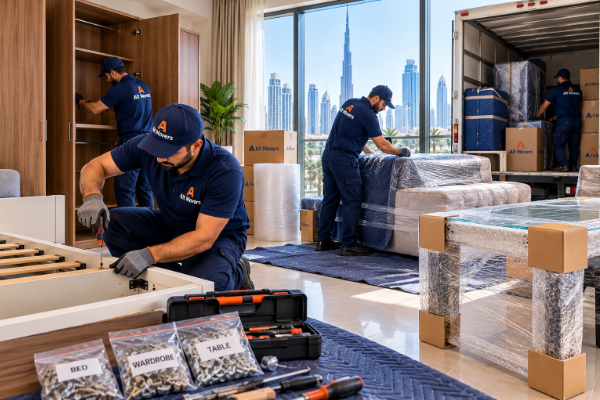
Place screws, bolts, dowels, brackets, and hinge fittings in separate sealed bags labelled with the relevant furniture item. Store each bag securely with its matching components or record its location in the inventory.
This simple system reduces the chance of losing or mixing hardware during transport.
Protect Panels, Legs, Frames and Connecting Joints
Detached panels, legs, headboards, shelves, and frame sections should be handled without dragging them across hard surfaces. Protect exposed edges and keep components supported while they are carried or stacked.
Avoid placing heavy items on top of delicate panels or parts that could bend under pressure.
Handle Flat-Pack and Custom Furniture Carefully
Flat-pack furniture may use connectors and panel fittings that can weaken if repeatedly dismantled or assembled incorrectly. Custom pieces may have unusual dimensions, finishes, or joining methods.
Movers should identify the appropriate method before removing parts. If an item is not designed for repeated disassembly, forcing it apart can damage the structure or affect its stability later.
What Materials Do Movers Use to Protect Furniture?
Packing materials should match the furniture’s surface, shape, weight, and fragility. Ask the moving company which materials are included in the quote and whether any specialist packing carries an additional charge.
Moving Blankets and Protective Furniture Covers
Moving blankets cushion sturdy furniture against minor knocks and contact with other items. Furniture covers can help protect sofas, chairs, and larger pieces from dirt and scuffs while they are carried and transported.
Covers should be fitted securely without creating unnecessary pressure on delicate components.
Bubble Wrap, Foam Sheets and Cardboard
Foam sheets and clean, non-abrasive layers can separate surfaces and help prevent scratches. Bubble wrap may be suitable for certain fragile components when used with the right protective layers, while cardboard can shield flat panels and provide additional cushioning.
The material should be appropriate for the surface being protected; unsuitable wrapping can itself leave marks or trap moisture.
Corner Guards and Edge Protectors
Corners and exposed edges are vulnerable when furniture passes through doorways or is loaded into a truck. Cardboard guards, foam protectors, and suitable edge padding help cushion these areas.
Check that guards remain in place during handling and do not scratch the finish they are intended to protect.
Mattress Bags and Upholstery Covers
Mattress bags help shield mattresses from dust and dirt, while upholstery covers protect sofas and armchairs from surface marks during the move.
Leather and other sensitive finishes need suitable materials. Avoid applying adhesive tape directly to furniture or sealing sensitive surfaces in plastic for long periods without considering the manufacturer’s care guidance.
Special Protection for Glass, Mirrors and Marble
Glass, mirrors, and marble can crack or chip under impact or uneven pressure. They may need edge guards, cushioning, rigid packaging, and supports suited to their dimensions and weight.
Large panels should be handled and secured according to their construction and appropriate handling guidance. Ask in advance how these items will be packed, carried, and positioned in the vehicle.
How Do Movers Protect Different Types of Furniture?
Different materials need different handling methods. The following examples can help you understand what to discuss with a moving company before booking.
Sofas, Armchairs and Leather Furniture
Sofas and armchairs should be covered to protect fabric and frames from dirt, snags, and scuffs. Exposed feet, armrests, and corners may need extra cushioning.
Leather requires care because unsuitable wrapping or trapped moisture can affect its finish. Use clean, suitable protective layers and follow the furniture manufacturer’s care recommendations.
Beds, Wardrobes and Wooden Cabinets
Beds, wardrobes, and wooden cabinets may need partial dismantling if their size or design makes them difficult to move safely. Protect detached panels, shelves, and frames separately, and keep them supported during handling.
Furniture should be clean and dry before wrapping. Dust or grit trapped beneath a cover can scratch a wooden finish when the item shifts.
Dining Tables and Glass Furniture
Table legs may be removed where the design allows, making the base and top easier to handle separately. Protect vulnerable edges and make sure heavy tops are supported appropriately.
Glass and marble tops need packing and lifting methods suited to their size and weight. Do not assume that the same wrapping method is suitable for every glass or stone surface.
Office Desks, Workstations and Filing Cabinets
Office furniture can include detachable desks, shelves, cable-management parts, drawers, and multiple fittings. Label components and protect exposed edges so they can be identified and reassembled correctly.
Secure drawers and loose parts according to the item’s design. Follow manufacturer guidance for filing cabinets and other heavy or specialized office equipment.
Antiques and High-Value Furniture
Antiques and high-value pieces may have delicate finishes, decorative details, or joints that are difficult to repair. Standard wrapping may not be sufficient for every item.
Tell the moving company about these pieces before booking and ask what packing method, handling experience, and written liability terms apply. Do not assume specialist handling is included unless it is confirmed.
How Do Movers Prevent Damage During Loading and Transport?
Good packing is only one part of furniture protection. Items also need to be carried safely, placed appropriately in the vehicle, and secured for the journey.
Protect Floors, Walls, Door Frames and Lift Interiors
Movers may use floor coverings and suitable padding in areas where bulky furniture could make contact with the property. Planning the route and coordinating the team helps reduce accidental impacts.
In apartment buildings, follow the building’s requirements for service lifts and shared areas.
Use Trolleys and Proper Lifting Techniques
Suitable trolleys, dollies, and lifting equipment can help move heavy or awkward furniture. The handling method should reflect the item’s weight, shape, and balance.
Movers should avoid dragging furniture across floors or lifting it by fragile parts. Bulky items may require coordinated team lifting.
Arrange Furniture Securely Inside the Moving Truck
Furniture should be positioned to minimize movement and avoid placing heavy items against unsupported panels or fragile surfaces. The layout should also allow items to be unloaded without unnecessary shifting.
The vehicle arrangement depends on the size and shape of the load, so there is no single layout suitable for every move.
Use Straps and Padding to Prevent Shifting
Suitable tie-down straps help secure furniture to designated anchor points. Padding between items reduces direct contact and friction during the journey.
Straps should be tightened enough to stabilize the load without crushing upholstery, bending panels, or putting excessive pressure on delicate finishes.
Protect Furniture From Dust, Heat and Moisture
Clean covers and appropriate packaging help reduce exposure to dust and moisture. Furniture should be dry before wrapping, and materials should be chosen for the item’s surface and care requirements.
In Dubai’s hot climate, avoid unnecessary exposure to direct sunlight and extreme heat, especially for sensitive finishes and upholstery.
How Do Movers Unload and Reassemble Furniture Safely?
At the destination, furniture parts should be matched to the correct items, reassembled according to the original design, and checked before the move is considered complete.
Check Components Against the Furniture Inventory
Use item labels, the inventory, and pre-move photographs to check that the required panels, shelves, hardware bags, and detachable parts have arrived. Document missing or visibly damaged components promptly rather than overlooking them during assembly.
Reassemble Furniture With the Correct Fittings
Follow the original design and manufacturer instructions where available. Use the correct screws, brackets, dowels, and connectors, and avoid forcing parts into the wrong holes or overtightening fittings. Complex or custom furniture may require specialist assistance if the correct assembly method is unclear.
Check Stability, Hinges, Doors and Drawers
After assembly, check that furniture stands securely and that doors, hinges, drawers, bed frames, and connecting joints work as intended. Correct loose or misaligned components before using the item. Some tall furniture may need suitable anti-tip securing, depending on its design and placement.
Inspect Furniture for Damage After Delivery
Inspect furniture for new scratches, dents, chips, broken fittings, or other visible changes. Compare concerns with your pre-move photographs and inventory. Keep relevant records and report damage promptly through the moving company’s stated procedure. Follow any deadlines in the service agreement.
What Furniture Protection Mistakes Should You Avoid?
A few avoidable practices can increase the risk of damage, even when furniture is packed carefully.
Applying Tape Directly to Delicate Finishes
Adhesive tape can leave residue or damage paint, varnish, veneer, and other finishes. Apply tape to the protective wrapping rather than directly to furniture, unless the manufacturer confirms that the surface can tolerate it.
Moving Large Furniture Without Dismantling When Necessary
Trying to move a large item through a tight access route can cause impacts or put strain on its joints. However, dismantling is not always the best option. Assess the item’s construction, condition, and route before deciding whether partial disassembly is safer.
Mixing Hardware From Different Furniture Items
Screws and fittings may look similar but differ in length, thread, or purpose. Keep each item’s hardware in a separate labelled bag and store it with the matching parts.
Using Inadequate Padding for Glass and Fragile Surfaces
Thin wrapping may not provide enough protection for glass, mirrors, marble, or decorative panels. These items need suitable cushioning, edge protection, and stable support.
Ask how fragile items will be handled and secured rather than relying on a single layer of wrapping.
How Can You Confirm Your Movers Provide Adequate Furniture Protection?
Before choosing a moving company in Dubai, compare the service scope, materials, dismantling and reassembly arrangements, and written terms—not price alone.
Ask Which Packing Materials Are Included
Confirm whether the quote includes moving blankets, furniture covers, corner protectors, mattress bags, and any required specialist packing. Ask about extra charges for glass, marble, antiques, or unusually fragile items.
Confirm Dismantling, Reassembly and Damage-Claim Terms
Ask which items will be dismantled and reassembled and whether those tasks are included in the price. Request written details about how existing damage is recorded and how loss or damage claims are handled.
Do not assume every item is covered by insurance. Coverage, exclusions, liability limits, and claim procedures depend on the applicable policy and service agreement.
Request a Written Moving Quote and Service Scope
A written quote should list the furniture and services covered, any additional charges, and the planned arrangements. Check whether dismantling, packing materials, transport, and reassembly are included or priced separately.
Sharing photos of large or delicate pieces before booking can help the company assess the requirements more accurately.
FAQs About Furniture Protection During Moving
Usually, furniture is protected before it is carried out, but the order depends on the item. Some pieces need to be dismantled first so that individual parts can be wrapped safely. Ask the company how it plans to prepare your furniture.
They use suitable protective layers, cushion exposed edges, separate surfaces that could rub together, and secure items in the vehicle. Furniture should be clean before wrapping so grit does not scratch the finish.
Not always. Large wardrobes, bed frames, and modular desks may need partial dismantling if they cannot pass safely through the access route. Sturdy items may be moved assembled when their size, condition, and handling requirements allow.
They use suitable cushioning, edge protection, and secure supports based on the item's size and construction. Confirm the planned packing and transport method for large or heavy panels before moving day.
Often, yes, if it is dismantled carefully and reassembled with the correct fittings and method. The result also depends on the item's condition, design, and whether its connectors are suitable for repeated assembly.
It depends on the policy, exclusions, service agreement, and claim conditions. Ask for the applicable terms in writing before booking; do not rely on a general verbal assurance.
Responsibility depends on the circumstances, the agreed terms, and any applicable insurance or legal arrangements. Photograph the damage, keep the inventory and moving documents, and notify the company promptly using its stated claims procedure.